GDPR CONSULTING AND CERTIFICATION SERVICES IN BANGALORE
If you are looking to gain the GDPR Compliance in Bangalore, TopCertifier is the one-stop solution for all your certification needs. TopCertifier offers GDPR Certification Consulting Services in Bangalore across all major locations. TopCertifier is a global certification consulting firm providing business advisory, training, process consultation, and certification services in Bangalore. With operations in 30+ countries and successful completion of 4500+ projects across different standards and sectors, we are one of the market leaders.
By working with TopCertifier, you can ensure that your organization becomes GDPR Compliant in a timely and effective manner with our expertise, guidance, and support TopCertifier is recognized as one of the Best GDPR Consultants in Bangalore because of its thorough understanding of local business culture/ necessities and strictly focuses on practices that could increase a company’s bottom-line rather than just sticking to standard guidelines and support organizations to achieve certification simpler, faster, and affordably.
ESSENTIAL RESOURCES FOR UNDERSTANDING GDPR CERTIFICATION IN BANGALORE
Know More About GDPR Certification Cost, Benefits, and Timeline
Dive into the realm of data privacy and protection with our in-depth guide on GDPR Compliance costs, benefits, and timeline for businesses in Bangalore.
A Clear Roadmap for Bangalore Businesses to Achieve GDPR Compliance
Navigate your GDPR Certification with confidence. Follow our clear GDPR Compliance Roadmap tailored exclusively for Bangalore businesses.
GDPR Documentation and GDPR Template Kits
Streamline your GDPR Certification Process in Bangalore with TopCertifier's comprehensive GDPR Documentation and Template Kits. Download Now
How does a GDPR Consultant assist Organizations
Achieve GDPR Certification in Bangalore Hassle-Free with Expert GDPR Consulting and Auditing Services.
Role of GDPR Assessors in Helping Bangalore Businesses Gain GDPR Certification
Learn how GDPR Assessors.are key to guiding Bangalore businesses through the nuances of GDPR Compliance.
GDPR Templates Free Download
Dowload our free GDPR Gap Analysis Template
Dowload our free GDPR Process Roadmap Template
Dowload our free GDPR Service Methodology
STEP-BY-STEP GDPR CERTIFICATION PROCESS IN BANGALORE
Getting GDPR Certification in Bangalore is simple with TopCertifier. We help IT, SaaS, BPO and GCC companies that handle EU personal data become GDPR compliant and audit-ready, aligned with India's DPDP Act.
Data Mapping & Scope
We map what personal data you collect, where it flows and who can access it.
GDPR Gap Analysis
We compare your current practices against GDPR requirements and list the gaps.
Lawful Basis & Consent
We define the lawful basis for each processing activity and fix consent flows.
Privacy Policies & Notices
We draft privacy notices, policies and records of processing activities (RoPA).
Data Protection Impact Assessment
We run DPIAs for high-risk processing and document the safeguards.
Data Subject Rights Process
We set up processes for access, correction, erasure and portability requests.
Security & Breach Response
We strengthen data security and build a 72-hour breach notification process.
Training & GDPR Audit
We train your staff and prepare you for an independent GDPR audit and certification.
Trust Us To Lead The Way In Certification And Compliance
Knowledge And Expertise

Thorough Understanding Of The Framework, Its Requirements, And Best Practices For Implementation
Proven Track Record

Successful Track Record Of Helping Clients Achieve Compliance, With Positive Client Testimonials And Case Studies.
Strong Project Management Skills

Ensure The Compliance Engagement Runs Smoothly And Is Completed On Time And Within Budget.
Experienced Team

Possession Of Experienced Professionals, Including Auditors, Consultants, And Technical Experts
Exceptional Customer Service

Committed To Excellent Customer Service With Clear Communication, Responsive Support, And A Focus On Satisfaction.
Competitive Pricing

We Prioritize Delivering High-Quality Services With Competitive Pricing That Provides Exceptional Value To Our Clients
FAQs
FREQUENTLY ASKED
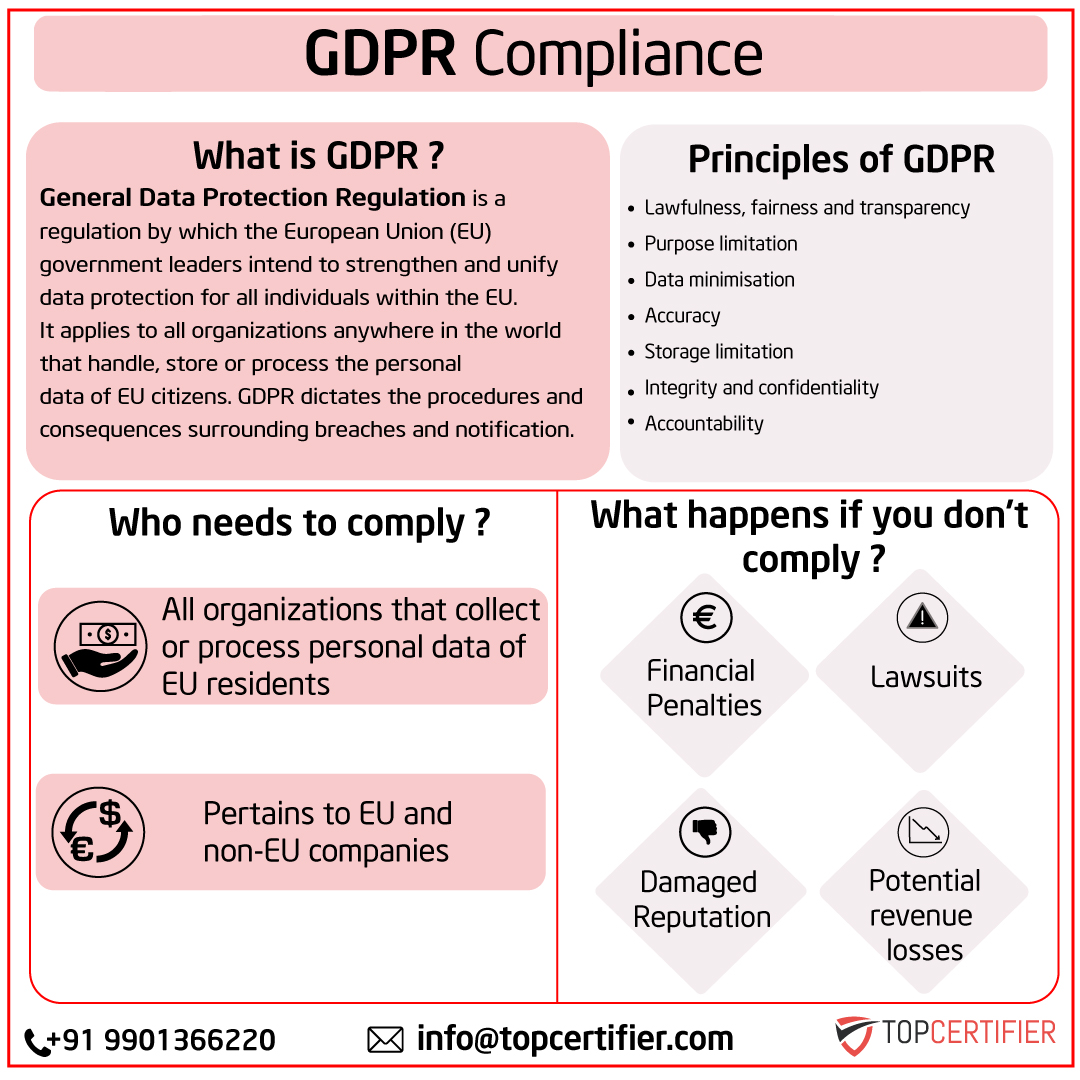
The General Data Protection Regulation (GDPR) is a comprehensive privacy regulation that went into effect in the European Union (EU) on May 25, 2018. It governs the collection, processing, and storage of personal data of EU citizens, regardless of where the data is processed.
GDPR applies to any organization that processes the personal data of EU citizens, regardless of the location of the organization. This includes organizations located in the EU and organizations located outside of the EU that offer goods or services to EU citizens or monitor their behavior.
The key principles of GDPR include obtaining consent for data processing, informing individuals about the processing of their data, providing individuals with access to their data, ensuring data accuracy, limiting data storage, protecting data from unauthorized access or disclosure, and reporting data breaches.
Non-compliance with GDPR can result in significant fines of up to 4% of an organization's annual global revenue or €20 million, whichever is greater. Additionally, non-compliance can result in legal actions, reputational damage, and loss of customer trust.
GDPR provides several data subject rights, including the right to access their data, the right to rectify incorrect data, the right to erasure (also known as the right to be forgotten), the right to restrict processing, the right to data portability, and the right to object to processing.
A Data Protection Officer (DPO) is an individual or an organization appointed by a data controller or processor to oversee GDPR compliance. The DPO is responsible for advising the organization on GDPR compliance, monitoring compliance, and acting as a point of contact for data subjects and supervisory authorities.
GDPR compliance requires organizations to implement appropriate technical and organizational measures to protect personal data, to appoint a DPO where required, to conduct a data protection impact assessment (DPIA) where necessary, and to report data breaches to supervisory authorities.
Yes, an organization can be GDPR compliant without obtaining certification. However, certification can provide organizations with a competitive advantage by demonstrating their commitment to data protection and privacy. It can also improve customer trust and mitigate risks associated with non-compliance.